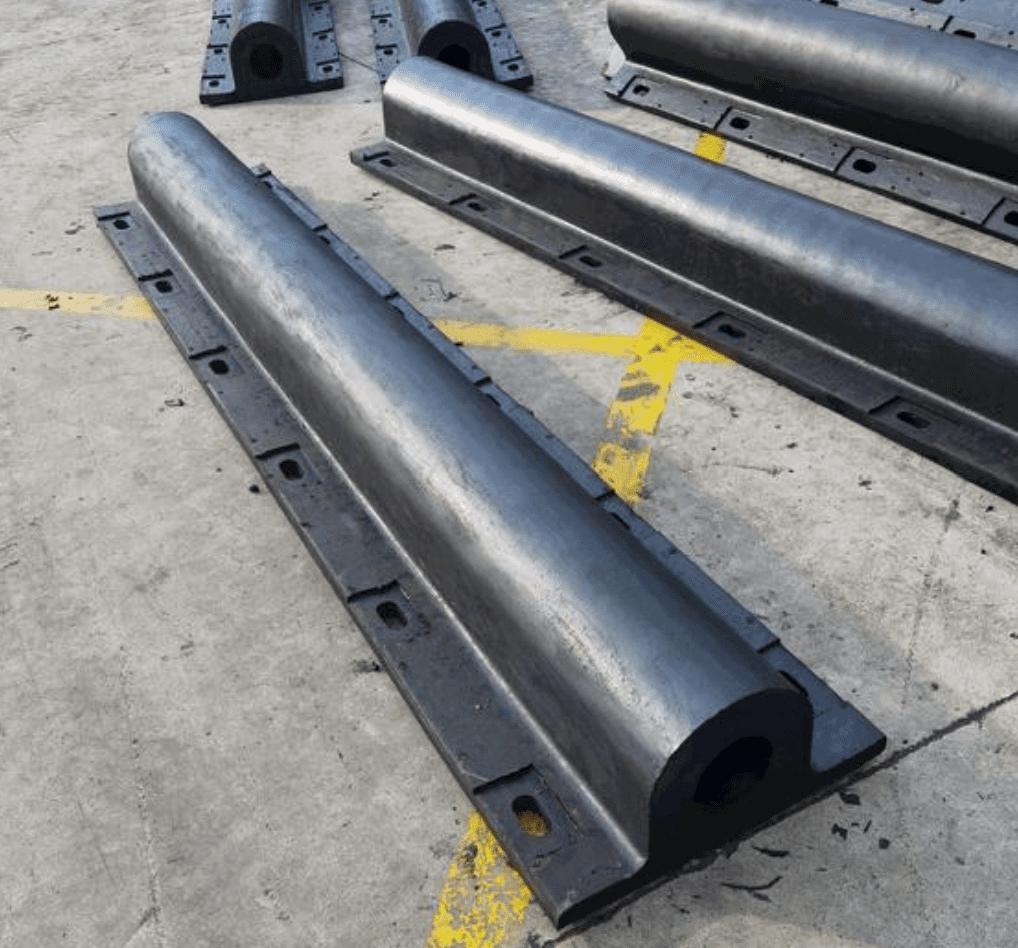
Rubber fenders are essential marine fenders and safety devices installed on docks, berths, and vessels to absorb impact energy during berthing. When a ship approaches a dock, significant kinetic energy is generated. Rubber fenders act as a protective buffer, reducing the force of impact and preventing damage to both the vessel and the marine structure.
They are widely used across ports, harbors, offshore platforms, and shipyards, especially in regions with heavy maritime activity like the UAE.
How Do Rubber Fenders Work?
Rubber fenders are designed to compress under pressure, absorbing the energy generated when a vessel comes into contact with a dock or another ship. Once the force is released, the fender returns to its original shape, maintaining long-term performance and durability.
Uses of Rubber Fenders
Rubber fenders play a critical role in ensuring safe and efficient marine operations. Common applications include:
Ports & Harbors – Protect quay walls and large vessels during docking
Shipyards – Safeguard ships during construction and maintenance
Offshore Platforms – Prevent damage during supply vessel operations
Jetties & Docks – Provide impact resistance for small to medium vessels
Tugboats & Barges – Offer side protection during maneuvering
Types of Rubber Fenders
1. Cone Fenders
Cone fenders are high-performance fenders known for excellent energy absorption and stability. They are ideal for large ports handling heavy vessels.
2. Cell Fenders
Cell fenders are robust and widely used in major ports. They provide high load capacity and durability for demanding marine environments.
3. Arch (V-Type) Fenders
These fenders are suitable for small to medium berths and offer good energy absorption with simple installation.
4. Cylindrical Fenders
One of the most versatile types, cylindrical fenders are commonly used in general-purpose marine applications and tugboats.
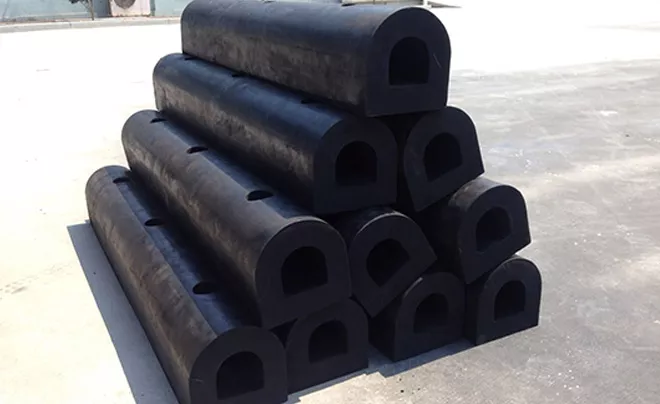
5. D-Type Fenders
Compact and easy to install, D-type fenders are ideal for smaller docks, jetties, and workboats.
1. Cone Fenders
Cone fenders are high-performance fenders known for excellent energy absorption and stability. They are ideal for large ports handling heavy vessels.
2. Cell Fenders
Cell fenders are robust and widely used in major ports. They provide high load capacity and durability for demanding marine environments.
3. Arch (V-Type) Fenders
These fenders are suitable for small to medium berths and offer good energy absorption with simple installation.
4. Cylindrical Fenders
One of the most versatile types, cylindrical fenders are commonly used in general-purpose marine applications and tugboats.
5. D-Type Fenders
Compact and easy to install, D-type fenders are ideal for smaller docks, jetties, and workboats.
6. Foam-Filled Fenders
These fenders are lightweight and provide high energy absorption, making them suitable for offshore and ship-to-ship operations.
These fenders are lightweight and provide high energy absorption, making them suitable for offshore and ship-to-ship operations.
Benefits of Rubber Fenders
⚓ High Energy Absorption
Rubber fenders effectively reduce impact forces, protecting both vessels and infrastructure.
⚓ High Energy Absorption
Rubber fenders effectively reduce impact forces, protecting both vessels and infrastructure.
🛡️ Enhanced Safety
They minimize the risk of accidents and structural damage during berthing operations.
🌊 Weather & Corrosion Resistance
Designed to withstand saltwater, UV exposure, and harsh marine conditions.
🔩 Low Maintenance
Require minimal upkeep while offering long service life.
📏 Customizable Solutions
Available in various sizes, shapes, and specifications to meet different project requirements.
💰 Cost-Effective
Reduce repair costs by preventing damage to expensive marine assets.
They minimize the risk of accidents and structural damage during berthing operations.
🌊 Weather & Corrosion Resistance
Designed to withstand saltwater, UV exposure, and harsh marine conditions.
🔩 Low Maintenance
Require minimal upkeep while offering long service life.
📏 Customizable Solutions
Available in various sizes, shapes, and specifications to meet different project requirements.
💰 Cost-Effective
Reduce repair costs by preventing damage to expensive marine assets.
Why Rubber Fenders Are Essential in UAE
With the UAE being a global maritime hub, ports and marine facilities require reliable protection systems. Rubber fenders ensure smooth docking operations, enhance safety standards, and support the efficiency of marine logistics.
Frequently Asked Questions
Rubber fenders are used to absorb impact energy during vessel berthing, protecting ships, docks, and marine structures from damage.
Common types include cone fenders, cell fenders, arch (V-type) fenders, cylindrical fenders, D-type fenders, and foam-filled fenders, each designed for specific marine applications.
Rubber fenders compress when a vessel makes contact, absorbing kinetic energy and reducing impact force, then return to their original shape after the load is released.
Yes, rubber fenders are designed to withstand saltwater, UV exposure, extreme weather, and heavy-duty marine conditions.
Yes, rubber fenders are designed to withstand saltwater, UV exposure, extreme weather, and heavy-duty marine conditions.